

What is an epic? Characteristics and Types of an Epic.
Epic
Definition
The word epic is derived from the
Ancient Greek adjective, “epikos”, which means a poetic
story. In literature, an epic is a long narrative poem, which is
usually related to heroic deeds of a person of an unusual courage and
unparalleled bravery. In order to depict this bravery and courage, the epic
uses grandiose style.
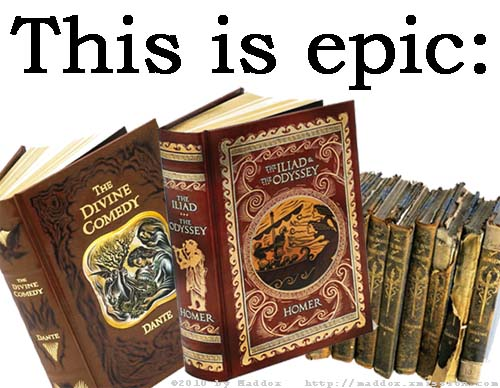
Characteristics of an Epic
There
are several characteristics of an epic, which distinguishes it from other forms
of poetry. They are discussed below:
§ The first and foremost characteristic of an epic is its
large size. An epic is an intensive and prolonged narrative in verse. Usually,
each single epic has been countermined in to multiple books. as an example,
Homer’s epics area unit divided into 24 books. Similarly, John Milton’s
Paradise Lost has been divided into twelve books.
§ Another essential feature of an epic is that the proven fact that it dwells upon
the achievements of a historical or ancient hero, or an individual of national
or international significance. each epic extolls the courage, deeds, bravery,
character and temperament of an individual, who has unbelievable physical and mental traits.
§ Exaggeration is additionally a vital part of an epic. The writer uses image to reveal the superior
skill of a hero. He doesn’t deliberate to use exaggeration to create an impact
on the audience.
§ Supernaturalism may be a must-have feature of each
epic. While not having to use
supernatural components, no epic would definitely turn out awe and surprise.
There square measure actually gods, demons, angels, fairies, and use of
supernatural forces like natural catastrophes in each epic. Milton’s Paradise
Lost, Homer’s epic poem, fictional character and Spenser’s Faerie Queen square
measure replete with supernatural components.
§ Morality may be a key characteristic of epic. The
poet’s foremost purpose in writing Associate in Nursing epic is to offer an
ethical lesson to his readers. for example, Johan Milton’s Paradise Lost may be
a good example during this regard. The writer desires to justify the ways in
which of God to man through the story of Adam. this can be the foremost
informative theme of the epic.
§ Invocation to the Muse is another vital quality of an epic. The poet, at the terribly starting of
the epic, seeks the assistance of the Muse whereas writing his epic. inspect
the start lines of the epic poem, Odyssey and Paradise Lost.
§ The diction of each epic is lofty, grand and
stylish. No trivial, common or informal language is employed in epic. The
author tries to use chic words to explain the events.
§ Use of Epic trope is associate degree another features
of an epic. Epic trope could be a far-fetched comparison between 2 objects,
that runs through several lines to explain the valorousness, bravery and large
stature of the hero. it's additionally known as Homeric trope.

Types
of an epic
There are two main types of epic:
§ Folk.
§ Literary.
Folk
Folk epic is an old type of poem that was originally told in
oral form. Over time authors tried to preserve them by writing them down in
arduous copies This meant that the story changed slightly depending on who was writing
it down. So, nobody really knows about the exact authorship of the folk epics. The folk’s epic variety of
poetry is totally different from literary poetry just because the previous is
predicated on a selected mythology, whereas the latter is predicated on the
ideas of the author. Within the literary epic, the author invents the story,
whereas the folk’s epic is bases on the mythology of the section, like
traditional knowledge for instance. the folk’s epic is essentially in oral
type, whereas the literary epic is in written type. The author of the literary
epic may be a well-known temperament, whereas the author of the folk’s epic may
be anyone!
In an Introduction to the Study of
Literature William Henry Hudson says:
“The epic of growth is
fresh, spontaneous, racy, the epic of art is learned, antiquarian, bookish,
imitative. Its specifically ‘literary’ qualities-its erudition, its echoes,
reminiscences, and borrowings- are indeed, as the Aeneid and Paradise Lost will
suffice to prove, among its most interesting characteristics for a cultured
reader.”
Let’s look at the following lines from
Beowulf:
Lo! the Spear-Danes’ glory through splendid achievements
The folk-kings’ former fame we have heard of,
How princes displayed then their prowess-in-battle.
Oft Scyld the Scefing from scathers in numbers
From many a people their mead-benches tore.
Since first he found him friendless and wretched,
The earl had had terror: comfort he got for it,
Waxed ’neath the welkin, world-honor gained,
Till all his neighbors o’er sea were compelled to
Bow to his bidding and bring him their tribute:
An excellent atheling! After was borne him
A son and heir, young in his dwelling,
Whom God-Father sent to solace the people.
Literary Epic
Literary epic
is typically called art epic. It's an epic, that imitates the conventions of
the folk epic, however offers it a written form. It's fully opposite to the
folk epic. They were written in contrast to the folk epics, that came all the
means all the way down to us through oral tradition. The literary epics tend to
be additional polished, coherent, and compact in structure and magnificence
once contrasted with the folk epics. Literary epics are the results of the
genius of the author. That's why they need nice significance from literary
purpose of read.
William Henry Hudson says in An
Introduction to the Study of Literature:
“The
literary epic naturally resembles the primitive epic, on which it is ultimately
based, in various fundamental characteristics. Its subject-matter is of the old
heroic and mythical kind; it makes free use of supernatural; it follows the
same structural plan and reproduces many traditional details of composition;
while, greatly it necessarily differs in style, it often adopts the formulas,
fixed epithets, and stereo typed phrases and locutions, which are among the
marked feature of the early type.”
Look at the lines taken from Milton’s
Paradise Lost:
OF MAN’S first disobedience, and the fruit
Of that forbidden tree whose mortal taste
Brought death into the World, and all our woe,
With loss of Eden, till one greater Man
Restore us, and regain the blissful Seat,
Sing, Heavenly Muse, that, on the secret top
Of Oreb, or of Sinai, didst inspire
That Shepherd who first taught the chosen seed
In the beginning how the heavens and earth
Rose out of Chaos: or, if Sion hill
Delight thee more, and Siloa’s brook that flowed
Fast by the oracle of God, I thence
Invoke thy aid to my adventrous song,
That with no middle flight intends to soar
Above the Aonian mount, while it pursues
Things unattempted yet in prose or rhyme.
(Paradise Lost by John Milton)
About Learn English
No comments